Saudi Arabia is reshaping professional tennis. SURJ CEO explains how PIF is buying the sport, not just sponsoring it.
“Renting assets is really hard. Owning them gives you that opportunity to really build a genuine, long-term future for the sport.”
That’s Danny Townsend, CEO of SURJ Sports Investments, speaking in late 2024. SURJ is the sports investment arm of Saudi Arabia’s Public Investment Fund (PIF), a $941 billion sovereign wealth fund with a mandate to reshape the kingdom’s global image.
Townsend wasn’t talking about sponsorship. He was talking about ownership. And two years into Saudi Arabia’s push into professional tennis, it’s clear he meant it literally.
Today, Saudi Arabia controls or sponsors the ATP and WTA rankings, the WTA Finals, the Next Gen ATP Finals, a new Masters 1000 tournament starting in 2028, and six of the biggest non-Grand Slam events. It holds a stake in ATP Media, the tours’ broadcast rights arm. And its prize money packages make traditional tennis structures look cheap.
This isn’t sponsorship. This is a takeover. And a fractured, cash-strapped sport is handing over the keys.
The Shopping List
Here’s what $1 billion buys in professional tennis:
The Rankings
Since 2024, the ATP and WTA rankings have been renamed the “PIF ATP Rankings” and “PIF WTA Rankings.” That’s more than branding. Rankings are the sport’s infrastructure: every tournament entry, every seeding, every wildcard, every sponsor negotiation runs through ranking points. Saudi Arabia’s name is now attached to virtually every tennis transaction worldwide.
The Tournaments
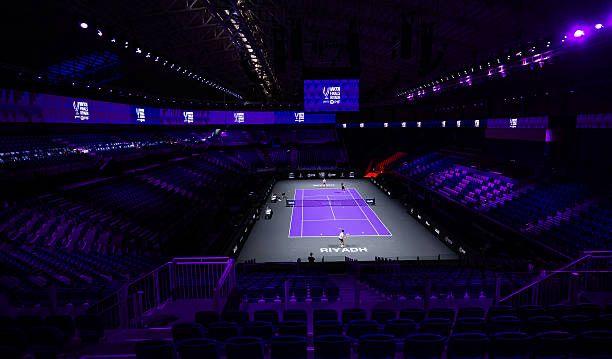
The WTA Finals moved to Riyadh in 2024 on a three-year deal. Prize money jumped from $9 million in Cancun (2023) to $15.25 million, a 70% increase, funded entirely by Saudi money, equalizing the men’s and women’s season-ending events for the first time in history.
The Next Gen ATP Finals landed in Jeddah in 2023 on a five-year deal. The winner now takes home $539,750 — more than many regular ATP Tour events.
In October 2025, the ATP announced a new Masters 1000 tournament in Saudi Arabia starting in 2028. That’s the first Masters 1000 expansion since 1990. These events sit just below the Grand Slams; adding a tenth doesn’t happen unless the economics are overwhelming.
Saudi Arabia also sponsors Indian Wells, Miami, Madrid, Beijing, and the ATP Finals in Turin — basically every major non-Grand Slam event except the French Masters.
The Broadcast Rights
When the Saudi Masters 1000 was announced, one detail slipped past most observers: the tournament would become a shareholder in ATP Media, the tours’ broadcast rights division.
That’s not sponsorship. That’s infrastructure ownership. ATP Media controls how tennis is packaged and sold to broadcasters globally. A stake gives Saudi Arabia influence over where matches air, how rights are negotiated, and how the sport appears on TV.
The Six Kings Slam: A Warning Shot
In October 2024 and 2025, Saudi Arabia hosted the Six Kings Slam, an exhibition event with no ranking points. It was a made-for-TV spectacle featuring six of the world’s top male players, with each participant guaranteed at least $1.5 million just for showing up. In 2025, Jannik Sinner won $6 million.
For context, the ATP Finals, the official season-ending championship, pays $2.2 million to an undefeated winner.
The message was unmistakable: Saudi Arabia can outbid the official tour whenever it wants. And the players will follow the money.
Why Tennis Can’t Say No
Tennis isn’t like other major sports. There’s no central governing body. The Grand Slams, ATP Tour, and WTA Tour all run independently with competing interests. Players have no union, no collective bargaining, no leverage.
The result: a sport where top players earn generational wealth while lower-ranked pros often lose money. Many spend $75,000–$100,000 annually to compete, while prize money at smaller tournaments hasn’t kept up. The calendar is punishing. Sponsorship growth is stagnant outside the top 20.
For decades, no one could fix this because no one could get the Grand Slams, tours, and players to agree on anything. Then Saudi Arabia appeared with $1 billion and a simple offer: we’ll fix it. Fund higher prize money. Expand the calendar. Create new revenue streams. No consensus required. Just take our money.
And tennis said yes.
Nick Kyrgios, a longtime critic of the sport’s economics, put it bluntly in 2024: “We are going to get paid what we deserve to get paid. Sign me up.”
The Sportswashing Problem Nobody Wants to Discuss
Saudi Arabia’s human rights record is well-documented: restrictions on women’s rights, criminalization of homosexuality, suppression of political dissent, and the 2018 killing of journalist Jamal Khashoggi. Its sports investments — golf, football, Formula 1, boxing, and tennis are widely described as “sportswashing,” projecting a modern image internationally while deflecting attention from domestic policies.
Tension has been most visible on the women’s tour. In 2024, Martina Navratilova and Chris Evert wrote that hosting the WTA Finals in Saudi Arabia would be “a step backward,” citing male guardianship laws and restrictions on women’s freedoms.
The WTA went ahead anyway. Prize money was historic. Players competed. The tour moved on.
A few ATP players, including Andy Murray, reportedly expressed private discomfort. Most said nothing. All took the money.
The reality: tennis doesn’t have the leverage to refuse, and players can’t turn down guaranteed seven-figure paydays. Tournament organizers see Saudi sponsorship as a lifeline.
Critics argue that by accepting PIF money, tennis legitimizes a troubling regime. Defenders say engagement is better than isolation and athletes shouldn’t bear geopolitical responsibility.
What’s undeniable: tennis chose the money over the moral ambiguity.
What Ownership Actually Looks Like
Stop thinking of Saudi Arabia as a sponsor. Think of it as an owner.
Sponsors buy visibility, and owners buy control.
Today, Saudi Arabia controls:
• ATP and WTA rankings (naming rights)
• WTA Finals (2024–2026)
• Next Gen ATP Finals (2023–2027)
• New Masters 1000 tournament (2028 onward)
• Sponsorship of six strategic and most commercial non-Grand Slam events
• Stake in ATP Media (broadcast rights)
That’s not sponsorship. That’s infrastructure.
The ambition is bigger. In 2024, PIF reportedly offered at least $1 billion to create a new combined top-level event in Saudi Arabia. If it closes, the kingdom would own one of the sport’s marquee events, gaining a permanent seat at the table for decisions on the calendar, prize money, and broadcast rights.
Townsend wasn’t being aspirational. He was descriptive: owning is easier than renting. Saudi Arabia isn’t renting tennis. It’s buying it.
The Players Don’t Care
Most pros support Saudi Arabia’s involvement.
They’re tired of losing money, playing 30 tournaments a year, and scraping by while top players prosper. Saudi money fixes that instantly: WTA Finals prize money jumped 70% in one year. Next Gen Finals now pays more than many tour-level events. The proposed Saudi Masters 1000 would inject millions more.
Players see this as overdue compensation for decades of underinvestment. The moral questions don’t vanish, they only get quieter when the alternative is continued financial struggle.
What Happens Next
By 2028, Saudi Arabia will host a Masters 1000 tournament, mandatory for top players.
The WTA Finals deal expires in 2026 but will be renewed. Next Gen Finals run through 2027. Rankings’ naming rights are multi-year deals.
Within five years, the kingdom could own or control:
• Rankings
• Two or three of the sport’s ten biggest annual events
• A significant stake in broadcast rights
• Permanent influence over commercial strategy
That’s not sponsorship. That’s governance.
The sport’s traditional powers – the Grand Slams, ATP and WTA operate independently and often in conflict. They’ve spent decades failing to agree on a unified calendar, revenue-sharing, or growth strategy.
Saudi Arabia entered that vacuum with $1 billion and a clear vision: buy the infrastructure, control the economics, and let existing institutions fight over the details.
It’s working.
The Real Question
The Saudi PIF doesn’t need tennis to be profitable. It needs visibility, alignment with Vision 2030, and global soft power projection. It can outspend every other entity indefinitely, without worrying about ROI.
Traditional sponsors need profits. Tournaments need solvency. Players need sustainable pay. Saudi Arabia just needs tennis to keep playing.
Over time, dependency grows. Tournaments accepting Saudi money find it difficult to replace revenue. Players accustomed to higher prize pools expect them to continue. Tours restructure around Saudi-funded events; once that happens, Saudi Arabia isn’t just sponsoring tennis, it’s underwriting it. And when you underwrite something, you effectively own it.
Danny Townsend was right: renting assets is hard. Owning them is easier.
And Saudi Arabia is no longer renting.