The PTPA wants to restructure professional tennis. Its most powerful founder just left and that tells you more than the pitch deck ever could
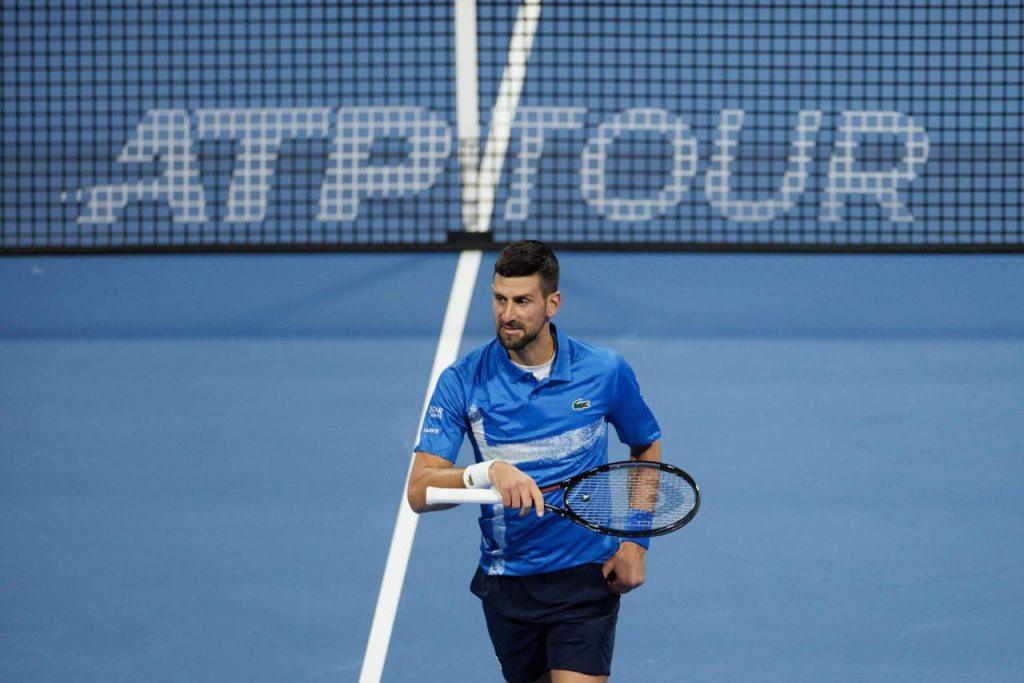
Novak didn’t leave quietly.
As the professional Tennis Players Association sought up to $1 billion to reshape professional tennis, its most powerful co-founder stepped away, citing concerns over transparency, governance and control. That exit not only weakened the PTPA’s credibility. It exposed how fragile the attempted “revolution” really is.
The timing could not have been more dramatic. In January 2026, the PTPA circulated its “Future Tennis” blueprint to more than 20 investment banks, seeking advisers for a radical restructuring of the sport. Expressions of interest were due within weeks. Days later, Djokovic announced his departure in a pointed X post, stripping the movement of its most powerful figurehead at the precise moment it needed credibility, unity and investor confidence.
With expressions of interest due by February 6, 2026, the organisation is betting on a player-led model that could unlock billions in revenue while addressing long-standing player grievances. But the path forward is fraught with legal, financial, and cultural risks.
A System Straining at the Seams
Tennis’s governance is a patchwork: the ATP and WTA tours, four independent Grand Slams, and a host of smaller events, each chasing its own commercial priorities. Players face punishing schedules: up to 11 months of competition, late-night finishes in extreme heat, and economic disparities that are impossible to ignore.
Top earners like Carlos Alcaraz command around $50 million annually (on-court and endorsements combined), while Coco Gauff pulls in $22 million in off-court deals alone. Yet hundreds of lower-ranked players struggle to cover travel, coaching, and living costs, with many retiring early due to financial strain. The ATP-WTA prize money gap persists, and even world No. 1s in the women’s game often earn far less off-court than their marketability might suggest.
Founded in 2020 by Djokovic and Vasek Pospisil, the PTPA positioned itself as the independent voice players needed, criticising existing player councils as too aligned with tournament owners. But sustaining a union across such a diverse membership, from multimillionaires to players sleeping in airports, has proven challenging.
The Blueprint for Disruption: Future Tennis and the Pinnacle Tour
The “Future Tennis” proposal is ambitious. It envisions a three-tier structure:
- Pinnacle Tour — The elite level: just 16 co-ed events per season for top players (including the four Grand Slams, a year-end finals, and premium stops), focusing on quality over quantity.
- Global Tour — Mid-tier events providing pathways to the top.
- Future Circuit — Entry-level with minimum prize thresholds.
Key promises include: - A 50% immediate increase in prize money.
- Equal pay for men and women by year three.
- Guaranteed minimums for the top 300 players: $1 million for ranks 1–100 in year one (rising to $2.3 million by year 10), $600,000 for 101–200, and $300,000 for 201–300.
- A new parent company (“FutureCo” or similar) to centralise commercial rights, broadcasting, and sponsorships, potentially growing tennis’s $2 billion economy to $5 billion by eliminating fragmentation.
The model echoes LIV Golf’s Saudi-backed disruption: fewer events, bigger purses, guaranteed money. Insiders speculate on deep-pocketed backers, possibly even sovereign funds already active in tennis via events like the Riyadh Masters.
Capital Rally Take
This isn’t a revolution. It’s a leverage play.
The $1 billion figure matters less than the threat it represents. By raising capital and litigating in parallel, the PTPA is attempting to force concessions from a fragmented system without fully breaking away from it. Djokovic’s exit doesn’t end the effort but exposes the central tension. The players who need disruption most lack power, while the players with power have little incentive to use it.
The Legal War Runs Parallel
This push doesn’t happen in isolation. In March 2025, the PTPA filed an antitrust lawsuit against the ATP, WTA, ITF, and (later added) three Grand Slams, alleging an “anti-competitive cartel” that suppresses player pay and innovation. A partial settlement with Tennis Australia in January 2026, including financial data sharing and reform consultations, offers a template for leverage. A New York court has already barred the ATP from retaliating against participating players.
The strategy appears clear: use litigation to force negotiations, then present the $1 billion investment as inevitable momentum.
The Cracks in the Foundation
Djokovic’s exit is more than optics. It signals internal fractures. Younger stars like Alcaraz and Jannik Sinner have stayed silent on the PTPA’s aggressive tactics, perhaps because the current system has already delivered wealth and fame. For elites, disruption risks established endorsement deals and fan-favourite tournaments. For lower ranks, guarantees could be transformative.
Generational divides loom large: Djokovic, nearing the end of his career, had less to lose. The next wave may prefer incremental change over a high-stakes gamble that could drag through courts for years.
What’s Actually at Stake
At its core, this is a power struggle: Should players control their labour and commercial rights, or do tournaments and tours hold ultimate authority? Other sports like basketball and football operate under collective bargaining with far more athlete leverage, but those have centralised leagues, unlike tennis’s decentralised, global model.
A slimmed-down Pinnacle Tour could create a premium, marketable product for investors and broadcasters. But it risks eroding tennis’s democratic appeal: fewer opportunities for emerging talent, reduced visibility in smaller markets, and a shift toward exhibition-style events that prioritise star power over competitive depth.
The February Reckoning and Beyond
As the February 6 deadline nears, tennis faces three plausible paths:
- The PTPA secures funding and momentum, potentially splintering the sport into competing tours.
- The effort falters under internal contradictions and external resistance, preserving the status quo.
- The aggressive posture forces genuine negotiations—perhaps accelerating ATP-WTA merger talks or broader reforms.
The Australian Open settlement hints at compromise. But revolutions rarely proceed smoothly. Djokovic’s departure reminds us that even well-intentioned proposals can fracture under their own weight.
Beyond the balance sheets lies something more fundamental: what tennis should be. The sport thrives on its open, year-round, global ecosystem, producing champions from every corner precisely because pathways remain accessible. A compressed, elite-focused model might boost earnings for the few, but it could distance the game from its traditions and the broader competitive fabric that sustains it.
The PTPA has forced essential questions into the open: players deserve better welfare, greater transparency, and a greater share of revenue. The current system is flawed. Yet the greatest danger isn’t stasis or radical change, it’s letting the battle over tennis’s future destroy what makes the sport enduringly compelling.