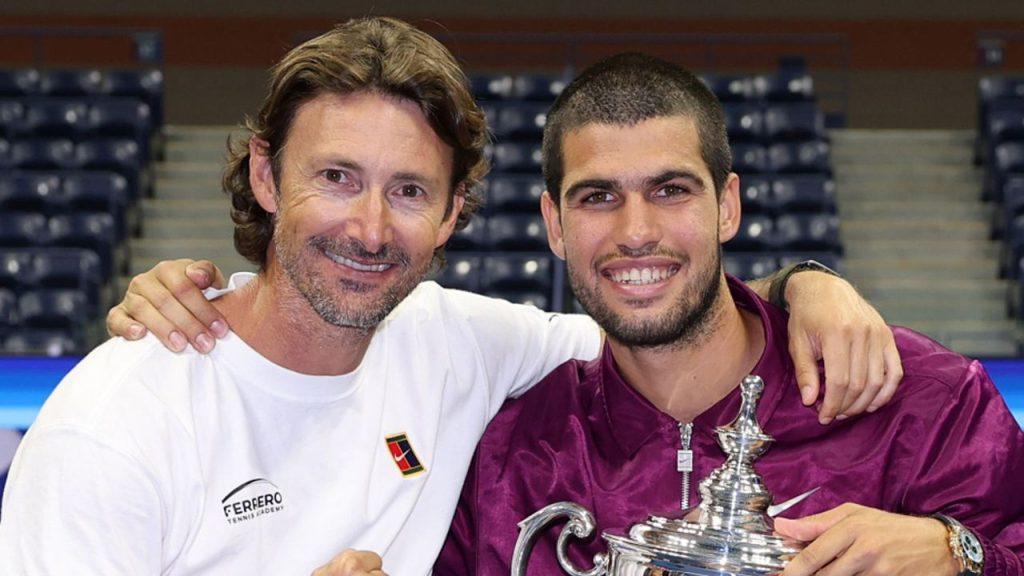
Juan Carlos Ferrero spent seven years as Carlos Alcaraz’s tennis coach, building a 15-year-old into the greatest player of his generation. Six Grand Slams and two Coach of the Year awards. Estimated $60M in prize money earned together and the youngest career Grand Slam in Open Era history.
On December 17, 2025. Fired. Instagram post. Done.
Reports suggested financial disagreements, specifically that Alcaraz’s camp proposed reducing Ferrero’s percentage as prize money grew. The coach who built one of tennis’s most successful partnerships was out of a job before Christmas, his replacement already identified, his assistant left behind to preserve the methods without paying for the mind that created them. He left with no severance, no union protection, and no explanation beyond social media.
This is what tennis coaching looks like when you strip away the celebration and examine the economics.
How Tennis Coaches Actually Get Paid
Tennis has no standardized contracts, no minimum wage, and no collective bargaining. What exists is an informal standard: coaches earn 5–15% of their players’ prize money, plus a negotiated base salary and expenses. The split depends on ranking, leverage, and negotiation.
Jannik Sinner won $19.7 million in prize money in 2024; at 10%, his coach earned roughly $1.97 million that year. Aryna Sabalenka earned $9.7 million; her coach took home approximately $970,000. Ferrero reportedly earned around $2 million annually coaching Alcaraz at his peak, combining base salary with a percentage of the season’s total, during which Alcaraz won two Grand Slams and eight titles. For elite coaches, this is life-changing money. The catch is that it’s entirely dependent on the player winning.
Success pays coaches. Failure starves them.
What Coaches Earn by Ranking Tier
The percentage model works when your player is winning millions. The further down the rankings you go, the more precarious it becomes.
| Player Level | Coach Earnings (Est.) | Expenses Covered? | Job Security |
| Top 10 | $500K – $2M | Yes | High |
| Top 50 | $150K – $500K | Usually | Medium |
| Top 100 | $50K – $150K | Sometimes | Low |
| Challenger | $30K – $ 80K | Rarely | Very Low |
Wealth concentrates at the top, and everyone else competes for scraps. The gap mirrors the players, only worse.
The Hidden Financial Reality
What the salary figures don’t capture is what coaches spend. Travelling full-time; hotels, flights across three continents, health insurance, pension contributions can easily cost $50–80K annually. Top players cover these costs; players ranked 80–150 often don’t, or can’t.
The result is coaches at the lower end effectively working for less than the headline figures suggest, funding their own careers in a sport that offers no employment protections, no dispute resolution, and no minimum standards.
Patrick Mouratoglou has enough independent brand equity to survive losing a top client, while most don’t. When a top-50 player fires their coach, income stops immediately and finding a replacement at a similar ranking can take months or sometimes, years.
Coaches have no safety net, only the next client.
The Capital Rally View
The Ferrero case exposes a structural tension tennis prefers not to examine. As players earn more, they become incentivized to reduce the percentage going to coaches. The coach who helped generate that wealth becomes a cost to optimize rather than a partner to reward.
Ferrero accepted a lower percentage in the early years when Alcaraz was a teenager, an investment in future upside that’s standard across the industry. What actually happened, as prize money reached $62.8 million, was the opposite: a renegotiation downward, then a firing. Guy Forget put it plainly in December 2025: “A player generating 30 million euros per year, paying his coach 800,000 or 1,500,000 contributes much more than he can pay.”
The sport has no mechanism to fix this. No governing body to appeal to, no arbitration process, no contract minimums. no severance requirements. Ferrero had won Coach of the Year days earlier, but none of it mattered.
Tennis celebrates coaches when they produce champions and discards them when it’s convenient.
The Bottom Line
Elite tennis coaches earn $500K–$2M annually. Mid-tier coaches earn $50–$300K. Lower-ranked coaches often struggle to cover expenses. None of them has job security. None has employer-funded benefits. None has union representation. The coach who built the world number one was fired before Christmas with no explanation beyond social media.
Tennis treats coaches as service providers rather than partners. The percentage model creates the illusion of shared success while ensuring coaches bear all the downside risk. The sport celebrates its coaches when they produce champions while the economics ensure they’re always one Instagram post away from unemployment.
Coaches build stars but have zero protection when the stars decide they’re done.