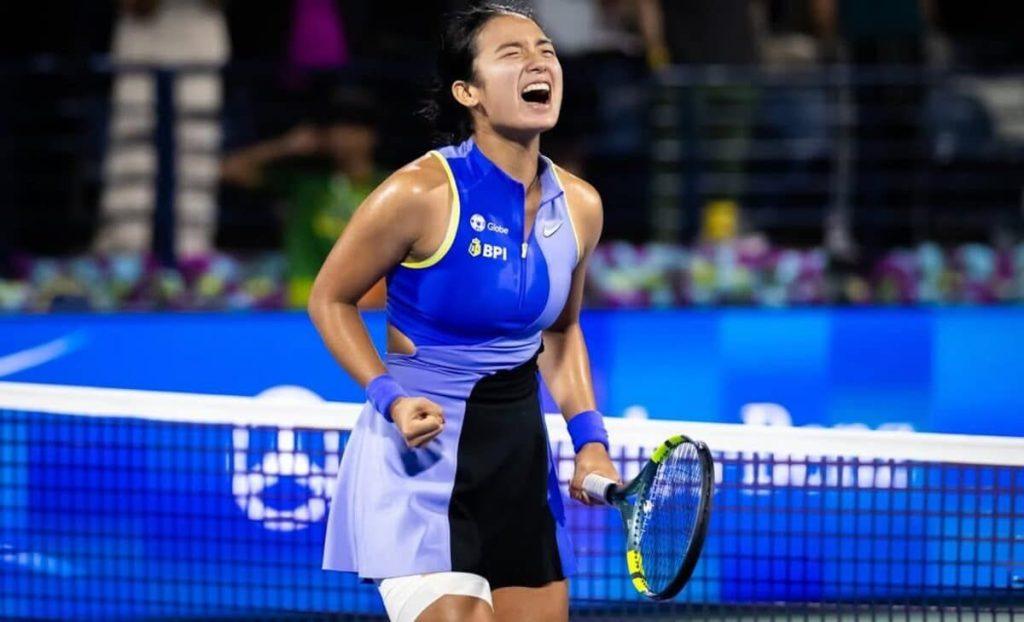
Alex Eala is not yet a mainstay in the latter stages of major tournaments, but the stands, media attention and commercial curiosity around her suggest something more structural is unfolding. In Southeast Asia, representation is translating into demand.
Professional tennis has always grown in waves. A player breaks through, a country rallies, broadcasters lean in, brands follow, and participation deepens. Without that catalytic figure, growth stalls at passive viewership.
For decades, Southeast Asia has consumed tennis without anchoring it. That dynamic is beginning to change with Alex Eala.
At 20, Eala remains in the developmental phase of her professional career. She is competing on the Women’s Tennis Association circuit, navigating the transition from junior dominance to senior consistency. What differentiates her trajectory is not merely ranking movement, but the visible response around it.
Where she plays in Asia, the atmosphere shifts.
Representation Converts to Attendance
The Philippines has a population exceeding 115 million, according to World Bank data. Yet elite-level tennis representation from the country has been historically limited. That absence creates intensity when a credible contender emerges.
Crowd behaviour is often the earliest indicator of commercial viability. When spectators arrive in numbers disproportionate to ranking, it signals latent demand. Tournament organisers track ticket sales, session upgrades and broadcast engagement because those metrics shape future scheduling decisions and sponsor pricing.
Eala’s matches in Asian settings have drawn noticeable support relative to her position in the rankings. That pattern matters because tennis tournaments are inventory businesses. Full stands translate into broadcast energy, which increases media value, which strengthens sponsorship negotiations.
Attendance is not sentiment. It is economics.
A Region With Scale but No Anchor
ASEAN economies collectively represent more than 650 million people. Digital penetration across the region has expanded rapidly over the past decade, creating commercial ecosystems that global brands actively pursue. Football and basketball have successfully embedded themselves through regional heroes and consistent exposure. Tennis has not achieved comparable traction.
The limiting factor has been the absence of a durable elite presence.
When a player becomes a focal point for national and regional identification, commercial strategy becomes easier. Brands prefer ambassadors who allow them to localise global campaigns without diluting international appeal. Eala’s development within European training systems provides credibility in established tennis markets, while her nationality gives her authentic regional relevance.
That combination is structurally attractive.
Popularity as an Early Indicator
Popularity in tennis is usually validated by Grand Slam runs or top-10 rankings. Yet market engagement often precedes statistical confirmation. Social traction, crowd density and media coverage can build while rankings remain transitional.
The commercial question is not whether Eala currently rivals the global recognition of players such as Coco Gauff or Carlos Alcaraz. It is whether she activates her home and regional market at a level that alters sponsor calculus.
Evidence suggests that she does.
National media coverage in the Philippines intensifies around her tournament appearances. Brand alignment conversations have already begun to form domestically. In emerging markets, first-mover endorsement opportunities tend to cluster quickly once viability is proven.
Commercial ecosystems respond to momentum faster than ranking tables do.
The Commercial Curve
Sponsorship valuation depends on three variables: visibility, growth trajectory and market size. Eala’s global visibility is still scaling; her trajectory remains upward, though not yet elite. Her market size, however, is fixed and substantial. This asymmetry is where commercial upside emerges.
If she stabilises inside the top 50, she secures more consistent main-draw exposure at higher-tier events, which will guarantee recurring broadcast presence. Recurring presence builds familiarity. Familiarity reduces sponsor risk.
Should she move further toward the top 30 or beyond, endorsement pricing would likely accelerate because she would represent not only performance credibility but market expansion potential.
Tennis hardly prices regional expansion correctly in its early phases. By the time validation is complete, acquisition costs have already risen.
The Capital Rally View
Alex Eala’s importance lies in what her popularity signals, not in what her ranking currently confirms.
She fills stands in contexts where ranking alone would not normally justify that demand, and that behaviour indicates a market ready to engage if given a sustained figure to support. Southeast Asia has scale, consumption growth and digital amplification capacity. What it has lacked is continuity at the elite level.
If Eala converts early engagement into a stable tour presence, her commercial trajectory could steepen quickly because she would represent access to a large, previously under-activated audience. This is not a prediction of immediate dominance but an assessment of leverage.
Markets expand when representation becomes reliable. Eala is approaching that threshold.
The Bottom Line
Alex Eala is already demonstrating that visibility can build ahead of titles. The attendance patterns, media focus and brand curiosity surrounding her suggest she occupies more than a standard developmental lane.
She is one to watch not only because of her ranking potential, but because she may serve as the commercial bridge tennis has long lacked in Southeast Asia.
If performance consistency follows, the economic implications will extend beyond individual endorsement deals. They will reshape how the sport evaluates regional opportunity.
That shift is what makes her commercially significant today.