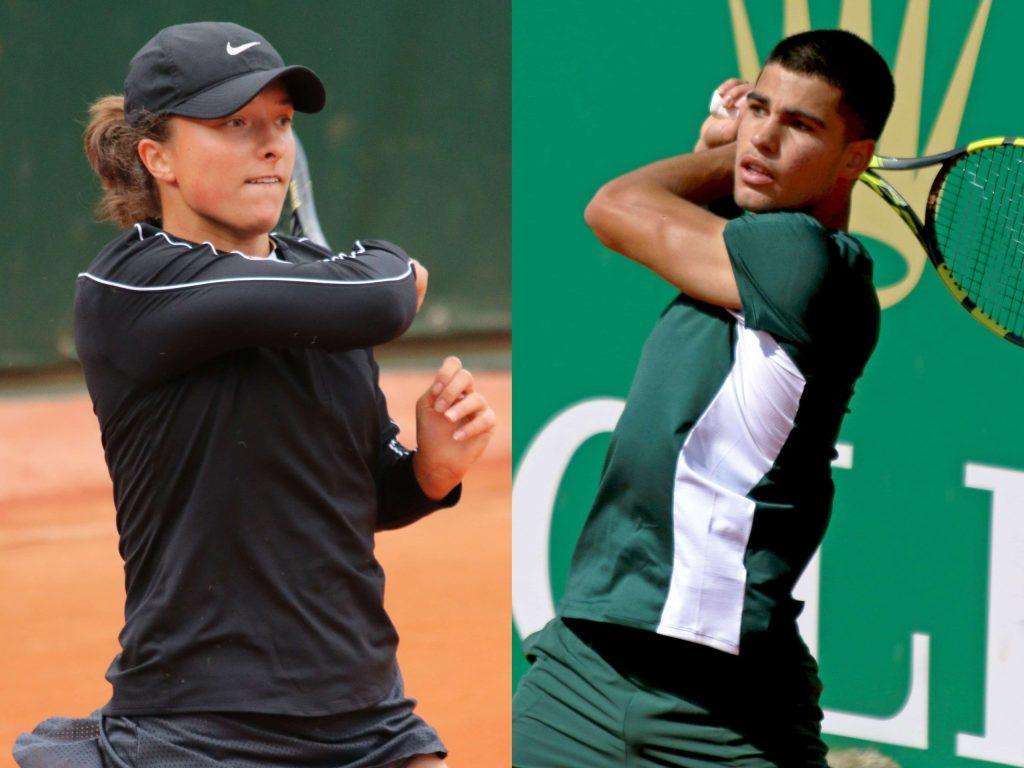
Iga Swiatek and Carlos Alcaraz have identical Grand Slam records. The endorsement market values them differently.
Iga and Carlos have won the same number of Grand Slam titles. Six each. Swiatek has been ranked world number one for over 100 weeks. Alcaraz is the youngest player to reach world number one since 2003.
In 2024–2025, Swiatek earned approximately $23.1 million. Alcaraz earned an estimated $48.3 million.
That’s not a marginal difference. Alcaraz earns more than double what Swiatek earns despite having an identical Grand Slam record.
Jannik Sinner has won four Grand Slams, two fewer than Swiatek. He earned an estimated $52.3 million in 2024–2025. That is roughly $29.2 million more than Swiatek, despite having significantly fewer major titles.
This is not a prize money issue. Grand Slam prize money is equal. The gap is mostly driven by endorsements, and it exposes how sports marketing values male and female athletes differently, even when their achievements are objectively comparable.
The Tennis Endorsement Gap Between Swiatek and Alcaraz
Swiatek’s endorsement income for 2024–2025 is estimated at around $15 million annually. Her sponsors include Rolex, Porsche, On, Visa, Lancôme, Red Bull, Lego, and Tecnifibre. It is an elite portfolio by any standard.
But Carlos Alcaraz, with the same Grand Slam count, earned an estimated $35 million in endorsements during the same period. His deals include Nike (approximately $15–20 million annually under a long-term contract signed in 2024), Rolex, BMW, Louis Vuitton, and Calvin Klein.
Jannik Sinner, with fewer Grand Slam titles than Swiatek, earned an estimated $25 million in endorsements. His Nike contract alone is reported to be worth roughly $15–16 million annually, as part of a long-term deal signed. He also partners with Rolex, Lavazza, Gucci, and other premium brands.
The difference is not subtle. Swiatek is paid like a strong investment. Alcaraz and Sinner are paid like franchise assets.
What Brands Say They’re Paying For
When asked to explain these gaps, brands usually point to three factors.
Viewership
Men’s tennis generally draws higher TV ratings, particularly in Grand Slam finals. This is true. But viewership differences do not plausibly explain a two-to-one or two-and-a-half-to-one endorsement gap when the athletes’ achievement levels are identical.
Social Media Reach
Alcaraz has approximately 4.8 million Instagram followers. Sinner has about 1.7 million. Swiatek has roughly 2.4 million. Those numbers do not justify Alcaraz earning more than twice what Swiatek earns, or Sinner earning substantially more despite a smaller following. Social Media is a factor, but it’s not the driver here.
Marketability.
This is where the explanation becomes less comfortable because “marketability” is code for subjective assessments that have little to do with performance. Male athletes are evaluated primarily on results. Female athletes are evaluated on results plus cultural relevance, aesthetic appeal, social media presence, personality, relatability and demographic fit.
The checklist for women is obviously longer, and every additional criterion creates an opportunity for a brand to justify paying less.
The Watch Deal Benchmark
Luxury watch partnerships are a useful benchmark for athlete endorsement in tennis. Watches are high-margin products marketed to affluent customers, and tennis players are considered ideal brand ambassadors because the sport skews wealthy and global.
Roger Federer’s Rolex partnership is the gold standard. Federer signed with Rolex in 2006 with earnings estimated to be well above $200 million. His current annual payment is reported to be around $8 million, even after retirement.
Rafael Nadal’s long-standing partnership with Richard Mille is considered one of the most valuable endorsement relationships in the sport, with watches retailing well into six figures and Nadal wearing the very obvious pieces during his matches, making him a walking advertisement for the brand.
Novak Djokovic’s partnerships with Seiko and Hublot were also reported to be eight-figure deals over time.
Iga Swiatek has a Rolex deal. But she is not positioned as a flagship ambassador in the way Federer was. She is part of a broad ambassador roster, which includes other athletes, spanning multiple sports. Based on her total endorsement income, industry estimates suggest she is not receiving marquee-level compensation comparable to male players with similar achievements.
Naomi Osaka Was the Exception
At her commercial peak in 2020–2021, Naomi Osaka earned an estimated $60 million annually, with the vast majority coming from endorsements. She became the highest-paid female athlete in history at the time.
She was also an outlier.
Osaka’s earning power came from a rare combination of factors: Grand Slam success, cultural relevance, biracial athlete representing Japan and the United States, demographic reach, and off-court engagements, including being vocal on social issues.
Osaka’s endorsement portfolio reflected that positioning. She signed deals with Nike, Mastercard, Nissan, Citizen and Shiseido. Her value was not just athletic; it was cultural and entrepreneurial, especially at a time when brands were trying to reach younger, more diverse audiences.
But even then, her earnings still trailed those of Federer, Nadal, and Djokovic during the same period.
Osaka’s earning model required more than just winning. It required being the right kind of winner; media-savvy, culturally relevant, engaging and more. Male players don’t face the same requirement. Djokovic isn’t beloved. Medvedev isn’t particularly charismatic. Sinner barely has a public personality. They’re all paid like royalty because they win consistently, or they once did.
Swiatek’s “Problem” is That She Just Wins
Swiatek is not Osaka. She’s not a cultural phenomenon. She’s not a social media personality. She’s Polish, which is a smaller commercial market compared to the United States, Japan or Western Europe. She doesn’t generate controversy or headlines outside of her match results.
What she does is win — consistently, professionally, and at a historically elite level with dominance on clay.
She is 24 years old. She has six Grand Slam titles. She has spent more than 100 weeks as world number one. By traditional performance metrics, she should be one of the most valuable endorsement properties in tennis.
But for female athletes, winning alone is rarely sufficient.
The Criteria Are Different, and That’s the Point
For male players, the endorsement equation is straightforward:
• win major tournaments
• remain consistently elite
• maintain global visibility
For female players, the criteria expand:
• win major tournaments
• remain constantly elite
• maintain global visibility
• plus cultural relevance
• plus engagement
• plus aesthetic alignment
• plus narrative value
The longer the checklist, the easier it is to discount value.
Swiatek does not have an endorsement problem. She has a valuation problem.
The market has decided that six Grand Slams won by a woman are worth roughly half as much as six Grand Slams won by a man.
That decision is not accidental.
And it is not neutral.