Between 2022 and 2025, Nike’s presence among seeded US Open players fell 47%, while its overall tennis roster shrank from 48 to 35. The company didn’t lose control of the market. It chose concentration over coverage, and that shift may define the future of tennis sponsorship.
Between 2022 and 2025, Nike’s presence at the US Open collapsed.
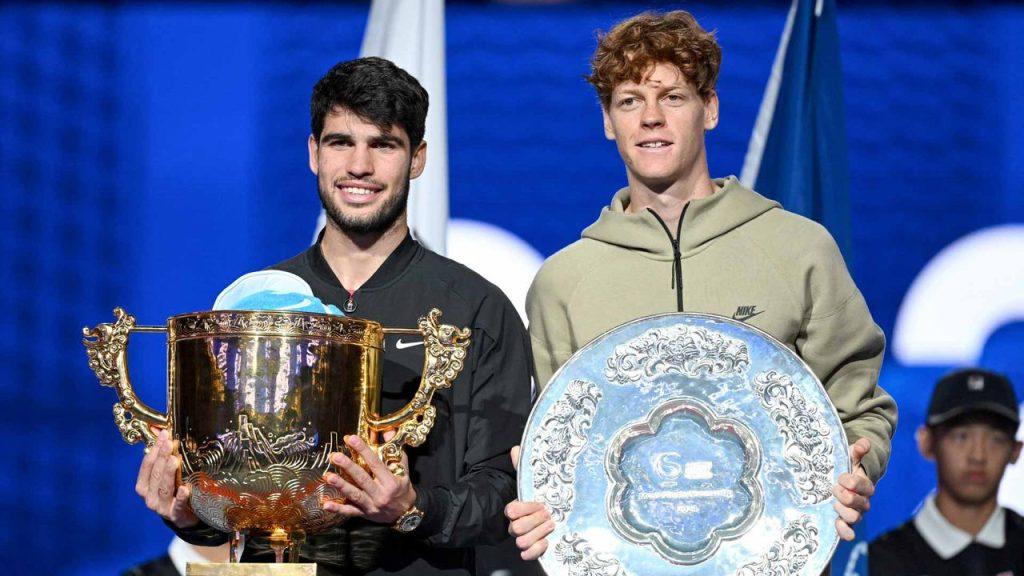
They went from dressing 21 seeded players to just 11, a 47% decline in three years, while their total professional tennis roster dropped from 48 players to 35. This wasn’t gradual erosion; it was a deliberate strategic retreat that almost nobody in tennis media bothered to cover. While the world celebrated Carlos Alcaraz and Jannik Sinner signing major extensions – Sinner’s reported $158 million, 10-year deal made global headlines, what stayed hidden was Nike quietly letting the rest of its roster go.
Frances Tiafoe left for Lululemon, Lorenzo Musetti switched to ASICS, Grigor Dimitrov moved his footwear to Adidas, and numerous mid-tier players who had worn Nike for years quietly found new homes elsewhere. According to Sportico’s 2025 US Open apparel analysis, Nike didn’t lose these players because it couldn’t afford them; it let them go because it no longer wanted them.
The strategy is unmistakable: focus spending on a handful of global superstars, scrap the middle tier, and bet that Alcaraz’s and Sinner’s massive global reach and commercial appeal will generate far more value than the combined contributions of 15 regionally relevant professionals ever could. The math apparently works, and that single fact tells you everything about the direction tennis sponsorship is now heading.
This isn’t just Nike’s story; it’s the entire market’s emerging direction.
The Adidas Flip
While Nike consolidated aggressively, Adidas expanded, but not in the way tennis probably hoped or expected. Adidas went from 28 players in 2022 to 36 in 2025, and at the US Open, they overtook Nike in seeded representation for the first time in recent memory, with 15 seeded players compared to Nike’s 11. On the surface, that looks like a genuine power shift.
Look closer
The reality becomes far more nuanced. Hubert Hurkacz left Yonex for Adidas, Grigor Dimitrov added Adidas footwear, and these signings are not breakthrough additions of young stars being built for a decade; they are established players in their late 20s and early 30s, often on split deals where apparel comes from one brand and shoes from another, suggesting neither company was willing to commit to full exclusivity. Adidas is winning the quantity game while Nike wins the value game. One company has more players wearing its logo; the other has Alcaraz and Sinner.
In pure ROI terms, the economics likely still favour Nike.
What Actually Ended
The most revealing sponsorship story of 2025 wasn’t a signing, it was a termination.
Emma Raducanu lost her reported £3 million-per-year Vodafone deal in April, and Porsche reclaimed her courtesy vehicle later in the year, though she retains ambassador status. Combined, that represents a meaningful decline in annual sponsorship value, with her endorsement income reportedly dropping from around $12 million to closer to $8 million.
Raducanu remains one of Britain’s most recognisable athletes, with partnerships with Dior and Tiffany, and she has cultural visibility that most players will never approach. And still, a major sponsor walked away. There was no scandal, no controversy, no public fallout; Vodafone simply evaluated performance, visibility, and return on investment, concluded the numbers no longer worked, and ended the relationship. Raducanu hadn’t won a title since 2021; the brand recalculated accordingly.
That’s the new calculus: marketability without results has limits, even for Grand Slam champions.
The Lifestyle Experiment
While traditional sportswear brands narrowed their rosters, 2025 saw lifestyle companies test tennis differently and with a noticeably different motivation.
Lululemon signed Frances Tiafoe as its first global tennis ambassador, and Psycho Bunny added Alex Popyrin. These aren’t performance-driven plays; they’re cultural ones. Lululemon doesn’t need Tiafoe to win Grand Slams; it needs him to be charismatic, visible, and positioned at the intersection of sport and lifestyle. Psycho Bunny wants tennis’s premium audience, not ATP ranking points. That’s positive for highly marketable personalities with strong personal brands. It does nothing for the broader ecosystem. Lululemon signed one player; Nike used to sponsor 48.
Even if five lifestyle brands enter tennis at this pace, they will collectively support fewer athletes than Nike alone once did. The numbers simply don’t scale.
What the Numbers Actually Show
At the 2025 US Open, Nike had 11 seeded players. In 2022, it had 21. That’s a 47% decline among the athletes who matter most commercially, who receive prime television coverage, global exposure, and casual-fan recognition. Adidas rose modestly, New Balance remained stable, and Uniqlo’s presence stayed limited. Total sponsorship dollars at the very top may be stable — or even rising — because nine-figure contracts skew perception; Alcaraz and Sinner reportedly earn sums annually that dwarf what mid-tier players once received collectively. But the number of sponsored professionals is shrinking. This creates a statistical illusion: record contracts suggest growth, while the base quietly thins.
For players ranked 30–100, that’s structural pressure. For brands, it’s efficiency.
The Gambling Expansion Nobody Wants to Discuss
As traditional sponsors consolidate, gambling companies are quietly filling space in the mid-tier market.
In December 2025, Caroline Garcia publicly rejected a reported $270,000 gambling sponsorship offer, citing personal values. She could afford to refuse. Many players ranked 50–100 cannot. The tours themselves maintain betting partnerships, and individual athletes face private financial decisions while managing annual costs that often exceed $150,000. As Nike and Adidas reduce roster depth, more players will face the same dilemma: accept gambling money, or struggle financially.
The sponsorship market is quietly dividing tennis into two groups: those marketable enough for global brands, and those dependent on industries others prefer not to discuss.
Capital Rally View
This isn’t a collapse. It’s concentration.
Nike’s strategy of fewer athletes, bigger contracts, and cleaner ROI is becoming the template. Adidas is competing on volume, but not necessarily building generational depth. Lifestyle brands are experimenting cautiously. Luxury remains selective. The middle tier is exposed. Tennis celebrates Sinner’s nine-figure extension while ignoring that the same brand cut roughly a quarter of its roster in three years.
That isn’t expansion; it’s efficiency disguised as growth.
What 2026 Likely Brings
Expect further consolidation.
Nike doubles down on elite concentration. Adidas reassesses depth. Smaller apparel brands either specialise or exit. Lifestyle brands continue one-player experiments instead of building rosters. Luxury stays selective. The revenue gap between top-10 players and everyone else shifts from large to structural. Prize money can rise. Individual contracts can break records.
However, if brands conclude that five athletes deliver the same global value as fifty, the sponsorship model underpinning professional tennis changes permanently.
The Bottom Line
Nike reduced its tennis roster by roughly 25% in three years while signing two players to nine-figure deals.
That is the future of tennis sponsorship. Massive concentration at the top. Minimal support for the middle. The sport can keep celebrating record contracts and calling it growth. Or it can acknowledge that when it becomes more profitable to sponsor five players than fifty, the economic base of the professional game narrows. Nike didn’t fail in tennis. It optimised.
The question now isn’t whether the strategy works. It’s who absorbs the cost of everyone left behind.
What do you think? Is tennis sponsorship becoming too top-heavy? Comment below or share this if it hits home.
Want more breakdowns like this? Rally with us – your support keeps the insights coming.