Ari Emanuel chairs the agency that represents the world’s best tennis players. He also founded the company that owns the tournaments they compete in. Two separate entities. One person is at the top of both.
The Sport That Forgot to Draw a Line
Vasek Pospisil is a former Wimbledon doubles champion, a Wimbledon singles quarterfinalist, and the co-founder of the most consequential antitrust lawsuit in professional tennis history. He is also a professional athlete who publicly stated he slept in his car when travelling to tournaments early in his career. “I’m one of the more fortunate players,” Pospisil said, “and I’ve still had to sleep in my car when travelling to matches early on.”
NFL players receive 48.5% of league revenue through collective bargaining. NBA players receive approximately 50%. Tennis players receive between ten and twenty percent of what the Grand Slams alone generate, in a sport with no collective bargaining agreement, no players’ union with legal standing, and no structural mechanism for the athletes at the centre of a multi-billion-dollar industry to formally challenge the terms of their participation in it.
That is the context. The conflict of interest at the heart of professional tennis operates inside it.
The Structure
In March 2025, IMG Tennis, the player representation division of WME Group, the Hollywood agency formerly known as Endeavor, was led by agent Max Eisenbud, who in July 2025 was promoted to head of client representation for all of WME Sports. His client list includes Carlos Alcaraz, Iga Swiatek, Coco Gauff, Taylor Fritz, Ben Shelton, Frances Tiafoe, Serena Williams, Andy Murray, and John McEnroe. These are not fringe clients; they include the men’s and women’s world number ones and some of the most commercially valuable athletes in the sport.
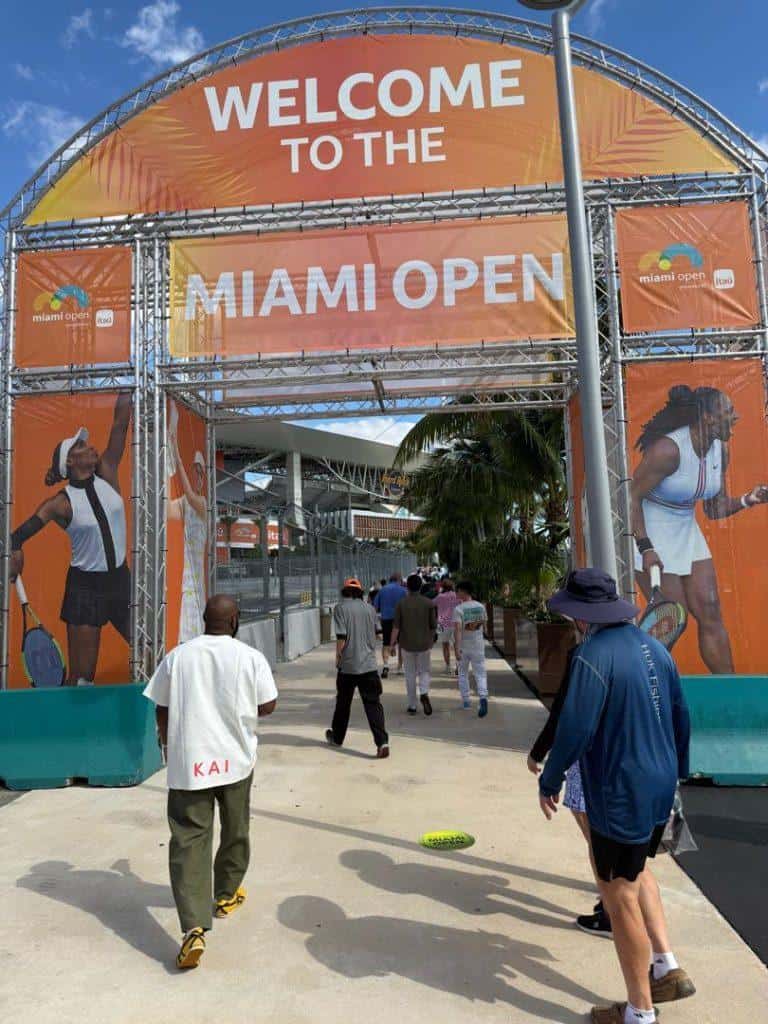
Three months later, on October 8, 2025, a new company called MARI launched. It acquired IMG’s full portfolio of international tennis events, including the Miami Open and the Madrid Open; two of the nine ATP Masters 1000 events on the calendar — along with the Mubadala Abu Dhabi Open, the Mubadala Citi DC Open, the SP Open, and the management rights to the Japan Open, Rio Open, Chengdu Open, and Hong Kong Open. MARI is backed by $2 billion from investors, including the Qatar Investment Authority, RedBird Capital Partners, Apollo, Ares Management, and the Miami Dolphins ownership group led by Stephen Ross.
The founder of MARI is Ari Emanuel. He is also the executive chairman of WME Group, the company that employs the agent who represents those players. Emanuel became a billionaire, per Bloomberg, in February 2025. His total compensation from Endeavor in 2023 was $83.9 million, a CEO-to-median worker pay ratio of 1,184-to-1.
WME Group and MARI are two legally separate entities. Emanuel chairs both of them. He has not been required by any regulatory body to choose between the two roles.
What That Actually Means
The conflict of interest in professional tennis is often described in corporate terms: one agency, two functions. The reality in 2026 is more personal and more direct. When Carlos Alcaraz walks onto the court at the Miami Open, his agent works for a company whose executive chairman also chairs the company that owns the tournament. When IMG Tennis submits its wildcard nominations to the Miami Open each year, as documented by tennis journalist Ben Rothenberg, the company selecting those wildcards and the company receiving those nominations share a founder at the top of both structures.
Octagon, now part of Omnicom Group following the completion of Omnicom’s acquisition of Interpublic on November 26, 2025, sits in a structurally similar position. Its website states that it represents more than fifty of the world’s top tennis personalities and owns or operates more than ten events globally. Octagon’s Managing Director of Tennis, Alastair Garland, sits on the WTA Tour Board of Directors; the same board that has regulatory oversight of the tournaments Octagon operates. No rule prohibits this.
Ben Rothenberg has described the wildcard situation at IMG-controlled events as something that is “most obvious to fans when looking at the wild card lists for the Miami Open each year, since IMG reliably rewards its clients there.” The 2026 wildcard list, announced this week, makes the point without commentary.
Venus Williams, ranked 582 in the world, with zero wins in 2026 across three tournaments, received a wildcard into the Miami Open. Williams is an IMG Tennis client under Max Eisenbud, the same WME Sports division whose executive chairman founded MARI, the company that owns the tournament. A wildcard into a Masters 1000 event is not a courtesy. It is worth, at minimum, first-round prize money and ranking points that can determine which draws a player can access for the rest of the season. Sports Illustrated assessed the practice as “deeply problematic and fundamentally unfair.” The ATP has not publicly moved to change it.
The 2026 Miami Open begins on March 17. Aryna Sabalenka, who left IMG fourteen months ago citing a lack of service, returns to defend her title at a tournament owned by the man who chairs the agency she left. Carlos Alcaraz, still represented by WME Sports, will compete at a tournament owned by his agent’s chairman.
The structure this article describes is not historical. It is on court in nine days.
The Players Who Left
Two departures in 2025 illustrated how visibly this structure was straining at its edges.
Aryna Sabalenka, who at the time of her departure had won two Grand Slams and was ranked number one in the world, left IMG in January 2025 to sign with Evolve, the boutique agency co-founded by Naomi Osaka. She was direct about why. “I wasn’t happy with the service,” she said at a press conference. “Yeah, there was tension between me and some of the people out there.” Her departure came while the same agency representing her was also operating the tournament she was preparing to defend her title at.
Coco Gauff was listed as an IMG Tennis client under Max Eisenbud in July 2025. In earlier reporting, she had been described as departing to launch Coco Gauff Enterprises with WME support, a structure that reflects the growing appetite among elite players to build commercial infrastructure outside the traditional agency model even while maintaining some of those relationships.
Roger Federer’s agency Team8, co-founded in 2013 with agent Tony Godsick, is the boutique expression of the same logic: a small roster of iconic clients, ownership of the Laver Cup, and strategic investments in On Running and Universal Tennis. The Laver Cup is not ATP-sanctioned, which means the conflict of interest that at least theoretically applies to ATP-regulated events does not have a formal regulatory mechanism through which it can be raised.
The sport’s biggest stars are restructuring their relationships with the agencies that run it. The agencies still run it.
The Players at the Bottom
The conflict matters most to the athletes who cannot negotiate their way around it. Players ranked 101 to 150 averaged approximately $300,000 per year before expenses, which a boutique agency founder described in SportsPro as running to $300,000 to $400,000 annually: coaching, physio, travel, and hotel. For those players, a wildcard into a Masters 1000 event is not a career footnote but a potential lifeline, and the structural disadvantage of being unrepresented by the agency that controls the wildcard list is not abstract. “The bigger agencies can bring things to a tournament that I can’t,” one boutique agent told SportsPro. “They can guarantee a player.” That guarantee is not written down anywhere. It does not need to be.
The nine ATP Masters 1000 events distributed a record $261 million in prize money in 2024. That figure represents meaningful progress, and the ATP has been consistent in citing it. It sounds less impressive placed against the fact that the USTA’s US Open alone generated an estimated $400 million in revenue in 2024, of which player prize money represented approximately 20%.
The Lawsuit
In March 2025, the Professional Tennis Players Association filed antitrust lawsuits against the ATP, WTA, ITF, and ITIA simultaneously in the US, UK, and EU, describing the sport as a cartel that suppresses player earnings and operates in systematic disregard of player welfare. The lawsuit referenced a case in which Larry Ellison, the billionaire owner of Indian Wells, one of the nine Masters 1000 events, was prevented by the governing bodies from increasing prize money at his own tournament. A billionaire tournament owner, blocked from paying his players more by the governing bodies that those players are now suing.
After settlement talks with the four Grand Slams failed to produce an agreement by the PTPA’s October 20, 2025, deadline, the PTPA filed a motion to add Tennis Australia, the All England Lawn Tennis Club, the French Tennis Federation, and the USTA as defendants. The amended complaint dropped the ITF and ITIA from the case. In December 2025, Tennis Australia settled with the PTPA, without admitting liability, and the Australian Open announced a 16% increase in prize money for 2026, bringing the total pool to A$111.5 million. The three remaining Grand Slams filed a joint motion to dismiss.
Wimbledon and Roland Garros separately argued that a New York court lacks jurisdiction over them. The USTA moved to compel arbitration. Novak Djokovic, who co-founded the PTPA with Pospisil in 2019, announced in January 2026 that he was leaving the organisation, citing concerns about its transparency and governance.
The case is active. The conflict it describes is not disputed by any party. The disagreement is about whether it constitutes an antitrust violation. The agencies have not been named as defendants. Nobody has required them to be.
Capital Rally View
The narrative frame most commonly applied to tennis’s commercial structure is complexity; the sport is genuinely fragmented, its governance genuinely distributed, its commercial relationships genuinely difficult to untangle. That framing is accurate and, in the hands of those who benefit from it, extremely useful. The more precise description is this: one man chairs the agency representing the world’s best players and owns the tournaments those players compete in, with no obligation to choose between the two.
A second agency sits on the tour board that regulates the tournaments it operates. A boutique agency owns a major event that sits entirely outside tour regulation. And the governing bodies that could require any of these entities to choose between their roles have chosen, consistently, not to.
Tennis Australia settled. The others are fighting. That difference is not a legal technicality; it is a signal about which institutions believe the current structure is defensible and which have concluded it is not.
The Bottom Line
The wildcard system is a symptom. The board structure is a symptom. The prize money gap is a symptom. The deeper question, the one the PTPA lawsuit has finally forced into a federal court, is whether professional tennis arrived at this arrangement by institutional negligence, or whether the system is functioning exactly as those who built it intended.
Sources
- Tennis Threads / PTPA — Pospisil sleeping in car quote; PTPA lawsuit announcement, March 2025
- CBC Sports — “Why a Tennis Players’ Association Has Sued the Groups That Run the Sport”, March 2025
- Sportico — “ATP, WTA Sued by PTPA for Restraining Tennis Player Pay”, March 2025
- ESPN — “Players File Suits vs. ATP, WTA, More, Cite Unfair System”, March 2025
- Wikipedia — NBA Collective Bargaining Agreement
- CGAA — NFL Collective Bargaining Agreement
- The Hollywood Reporter — Max Eisenbud promoted to head of WME Sports client representation; IMG Tennis client list, July 2025
- The Hollywood Reporter / Variety — MARI launch, October 8, 2025
- MARI Group official press release — Tennis portfolio, investor list, October 8, 2025
- Octagon official website — Tennis portfolio: 50+ players, 10+ events
- Octagon press release — Alastair Garland appointed Managing Director of Octagon Tennis; WTA Tour Board membership, March 2025
- Wikipedia — Octagon (sports agency): Omnicom acquisition of Interpublic, November 2025
- Ben Rothenberg Newsletter — IMG Miami Open wildcard pattern, December 2024
- Sports Illustrated — Wildcards “deeply problematic and fundamentally unfair”, August 2023
- SportsPro — Boutique agency founder on wildcard guarantees, November 2017
- EssentiallySports — Pospisil on player expenses; ranked 101–150 average earnings
- ATP Official — 2024 Masters 1000 prize money record, $261M
- Associated Press / Tennis press — Aryna Sabalenka departure from IMG, January 2025
- Team8 official website — Laver Cup ownership; On Running and Universal Tennis investment stakes
- Harvard Law School — PTPA antitrust analysis, June 2025
- Front Office Sports — PTPA enters talks with Grand Slams, June 2025
- International and Comparative Law Review, University of Miami — PTPA Grand Slam expansion, September 22, 2025
- Race to the Bottom — PTPA October 20, 2025 deadline; motion to add Grand Slams, January 2026
- Miller Johnson — Tennis Australia settlement, December 2025; Australian Open 2026 prize money increase
- EssentiallySports — Tennis Australia settlement confirmed December 13, 2025; Wimbledon, Roland Garros, US Open joint dismissal motion
- Sportico — Tennis Australia settlement; Djokovic departure from PTPA, January 2026
- Sport Resolutions / PTPA complaint — Larry Ellison / Indian Wells prize money case referenced in PTPA lawsuit
- Wikipedia — Ari Emanuel; WME Group (formerly Endeavor)
- Variety — Endeavor goes private; Ari Emanuel becomes executive chairman WME Group; TKO CEO, March 2025
- Bloomberg — Ari Emanuel debuted on Billionaires Index, February 2025